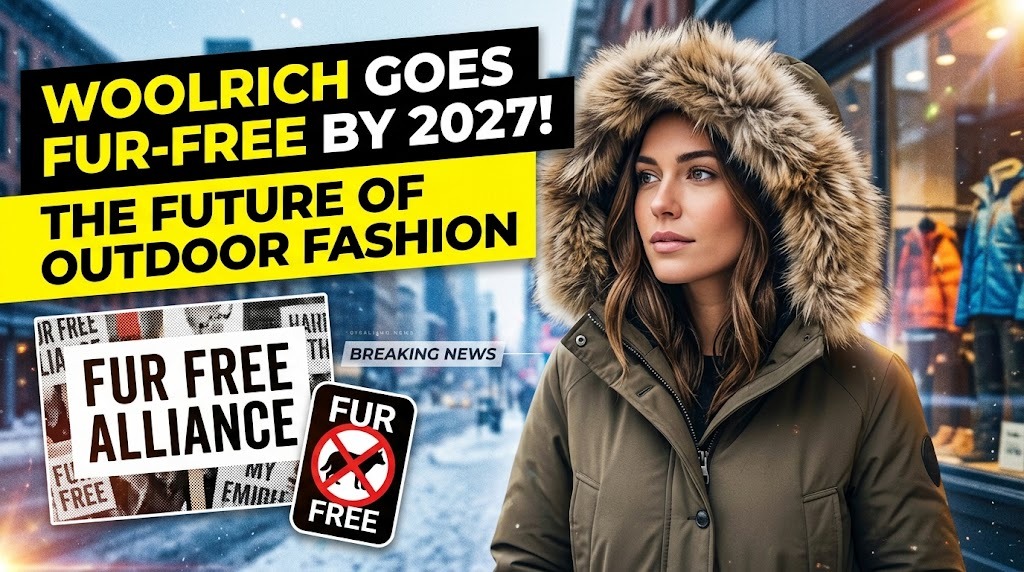
The landscape of the global apparel industry is undergoing a massive, permanent transformation, and one of the most significant recent milestones has just been set. Woolrich Europe has officially committed to ending the use of animal fur in all new garments, a policy that will go into full effect by January 1, 2027.
For a heritage outdoor brand that built its legacy over nearly two centuries—originally outfitting American fur trappers, loggers, and pipeline workers—this announcement represents far more than a simple shift in supply chain logistics. It is a monumental pivot toward sustainable fashion, reflecting a retail environment where brand accountability and cruelty-free manufacturing have become non-negotiable consumer demands.
The Heritage: From Fur Trappers to Modern Consumers
To truly understand the weight of this announcement, one must look at the history of the brand. Founded in 1830 by John Rich in Pennsylvania, Woolrich is the oldest manufacturer of outdoor wear in the United States. For decades, their garments were engineered for survival in extreme conditions, heavily relying on animal products for insulation and weather resistance.
The brand’s most iconic garment, the Arctic Parka, was introduced in 1972 to outfit workers constructing the Alaskan pipeline in sub-zero temperatures. For over fifty years, the hallmark of this premium parka was its natural coyote fur ruff around the hood.
Dropping animal fur requires a complete re-engineering of the brand’s flagship products. It is a bold acknowledgment that legacy and tradition can no longer be used as excuses to ignore the ethical standards of the modern era.
The Catalyst: The Power of the Fur Free Alliance
Woolrich Europe’s policy change was not a spontaneous corporate initiative. It is the direct result of a highly coordinated, relentless global advocacy campaign led by the Fur Free Alliance (FFA). Representing a formidable coalition of 45 animal protection organizations—including prominent groups like Four Paws and Humane World for Animals—the FFA set its sights on the heritage brand to push for industry-wide accountability.
Launched in September 2025, the campaign utilized a dual approach of digital activism and high-visibility, on-the-ground demonstrations. The strategy was highly effective, mobilizing consumers to directly confront the brand’s leadership. Key highlights of the movement included:
-
Unprecedented Digital Outreach: Activists and concerned shoppers sent over 200,000 emails directly to Woolrich executives, alongside thousands of coordinated phone calls demanding an end to fur sourcing.
-
High-Impact Demonstrations: Vibrant, organized protests took place outside flagship Woolrich retail stores in major European fashion capitals, including Amsterdam, Bologna, Frankfurt, Hamburg, Milan, and Munich.
-
Public Education: The campaign successfully shifted public sentiment by highlighting the grim realities of fur farming, moving the conversation from niche animal rights circles into the mainstream fashion discourse.
The True Cost of Fur: Ethics and Environment
The push for fur-free fashion is driven by two parallel concerns: severe animal welfare issues and catastrophic environmental impacts. Modern consumers are increasingly educated on the realities of the fur trade, where animals are often kept in restrictive, unnatural conditions.
Furthermore, the environmental footprint of fur farming is staggering. Despite industry claims that fur is a “natural” product, processing raw animal pelts into wearable fashion requires heavy chemical treatments to prevent the biological materials from putrefying. These tanning and dyeing processes utilize highly toxic chemicals, including formaldehyde and chromium, which pose significant risks to local waterways and ecosystems.
When factoring in the carbon emissions of large-scale animal agriculture, the environmental cost of a fur-trimmed jacket far exceeds the impact of its synthetic or bio-based alternatives.
Economic Realities and European Legislation
For legacy brands operating today, dropping animal fur is no longer merely a public relations strategy to appease activists; it is an urgent business necessity. Woolrich Europe’s transition away from fur aligns perfectly with rapidly shifting European legislation and the underlying economics of the fashion market.
Across Europe, the legal tolerance for fur farming is collapsing. Recent economic and policy reports cited by animal welfare organizations indicate that enforcing an EU-wide ban on fur farming is significantly more cost-effective for governments than attempting to heavily regulate the trade and enforce higher welfare standards.
With initiatives like the “Fur Free Europe” European Citizens’ Initiative gaining massive traction and leading to legislative action, brands that continue to rely on animal pelts face severe supply chain vulnerabilities. By committing to a 2027 phase-out, Woolrich Europe is strategically future-proofing its business model against inevitable legislative bans and avoiding the reputational damage associated with an increasingly stigmatized material.
The Future of Outerwear: Material Innovation
As the January 2027 deadline approaches, Woolrich Europe will overhaul its manufacturing processes to transition completely away from animal products. This opens the door for significant material innovation. Shoppers and industry analysts can expect to see the brand embrace cutting-edge textile technologies that provide the warmth, durability, and aesthetic appeal of traditional fur without the associated cruelty.
The immediate phase-out plan will likely involve:
-
Inventory Sell-Through: A gradual phasing out of existing fur-trimmed inventory across European retail channels to prevent wasteful destruction of already manufactured goods.
-
Bio-Based Faux Furs: The integration of next-generation faux furs made from plant-based ingredients (such as corn by-products) rather than traditional petroleum-based plastics, lowering the garments’ overall carbon footprint.
-
Advanced Synthetics: Continued reliance on high-performance insulators and recycled fabrics that mimic the heat-trapping properties of natural down and fur.
Setting a New Industry Standard
Woolrich Europe’s commitment sends a clear and uncompromising message to the rest of the apparel sector. When a brand with roots so deeply embedded in the historical fur trade successfully pivots to a cruelty-free model, it dismantles the argument that luxury and performance require animal exploitation.
This decision puts immediate, heavy pressure on the few remaining luxury houses and outdoor competitors who have yet to adopt fur-free policies. The 2027 deadline serves as a benchmark for the industry, proving that innovation, empathy, and environmental stewardship are the true pillars of future success in the global fashion market.